|
|||
 |
|||
| You are here: Home ... Case Studies ... DT | |||
|
|||
DT KS2 (Y4) : A packaging project Activity Description This activity was carried out by a mixed-age key stage 2 class. The teacher divided the class into groups. Each group selected a piece of cardboard packaging (for a tube of toothpaste) and looked at its construction, purpose and graphics. They recorded relevant information on electronic guidance sheets and took photographs with a digital camera. This initial investigation and evaluation took three hours. Using an interactive whiteboard, the teacher then taught the ICT skills needed to use computer-aided design (CAD) software. The pupils practised using the software by making a net for a cube and investigating the number of flaps needed. This practical activity took 30 minutes. In the next session, the pupils used the CAD software to recreate the packaging they had deconstructed originally. This took three hours. The pupils then started to consider an assignment to design a new box for a toothpaste tube. There were two criteria: the design had to be radical and use less packaging than the original. The pupils used an internet search engine to research a variety of designs. Then they were encouraged to apply their search results (along with knowledge gained from the deconstruction), record the dimensions of their tube and generate initial ideas on design sheets. Finally, using CAD software the pupils designed, printed, made, evaluated and redesigned their products. ICT resource used:
Activity Objectives
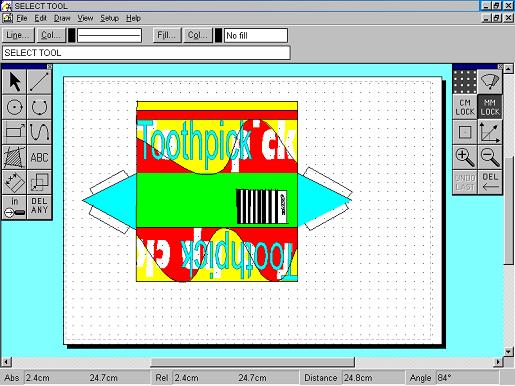
Commentary: Using ICT Using ICT for this activity enabled the pupils to abandon the traditional methods of creating nets (two-dimensional designs for three-dimensional packaging) and take more risks, exploring the potential of a wider range of designs. Many of the pupils had a vision of their final product but did not have the necessary motor or graphical skills to achieve it. The pupils soon realised that by using ICT they would not only meet but exceed their vision of the finished packaging. This proved to be highly motivating and resulted in the pupils becoming confident as independent learners. Lower-attaining pupils found the application of ICT particularly valuable. Higher-attaining pupils also benefited: they were challenged to be more creative in their design. The use of the internet provided the pupils with up-to-date material that would not otherwise have been available. An interactive whiteboard made the teaching of computer-aided design (CAD) software quick and easy. This resulted in the pupils being able to rapidly develop and consolidate their skills in CAD. The pupils were able to design, print, make, evaluate and redesign their products with the CAD software in a fraction of the time required when using a pencil and ruler. As they could model ideas rapidly, it was not a problem if their nets were the wrong size. Even though the quickest stage during the making assignment was the incorporation of graphics, it was also the stage at which the pupils fully appreciated ICT because it gave their product a professional finish. One group discovered that their text graphic was upside down when they printed out their packaging net. If they had been using pencil and ruler they would have had to leave it or start all over again, but with CAD software the problem was solved in two clicks. The use of ICT therefore resulted in a product of far higher quality, giving the pupils a greater sense of satisfaction and achievement.
The incorporation of graphics onto the finished packaging net using CAD software This case study is taken from the NC Action website |
|||
|
|||
|
|||
|
|||